If you live in Florida, storm season is not a plot twist. It is a calendar event.
So the real question is not “Do I need hurricane protection?” It is “What protection is actually worth paying for, year after year, when the sun is out and the weather app is calm?”
Hurricane shutters are one of those upgrades that feel expensive until you price out what a single broken window can turn into: water intrusion, ruined floors, mold remediation, temporary boarding, hotel stays, lost work time, and a very long conversation with your insurance adjuster.
Let’s break down hurricane shutters the way Florida homeowners actually think about them: cost vs long-term protection, insurance benefits, resale value, and the priceless ability to sleep the night before a storm without doom scrolling.
What hurricane shutters really protect you from
Hurricane shutters are designed to protect openings, especially windows and glass doors, from windborne debris. When debris breaks an opening, pressure can build inside the home and the damage escalates fast. Even if your roof stays on, water can pour in through a failed window and destroy everything you own at ground level.
Florida building codes also recognize opening protection in windborne debris regions, with code language tied to standards like ASTM E1886 and ASTM E1996 for impact performance.
In plain terms, shutters are not a cosmetic add-on. They are part of a real storm hardening strategy.
The cost side of the equation
Shutter pricing in Florida varies a lot because every home is different. Size of openings, number of windows, stories, access, mounting surfaces, product approval requirements, and the shutter type all affect cost.
Here is the homeowner-friendly way to think about it:
1) Upfront cost ranges by shutter type
Most Florida homes fall into one of these categories:
- Storm panels
Usually the lowest upfront cost. Great protection when properly installed and anchored. Tradeoff is deployment time and storage. - Accordion shutters
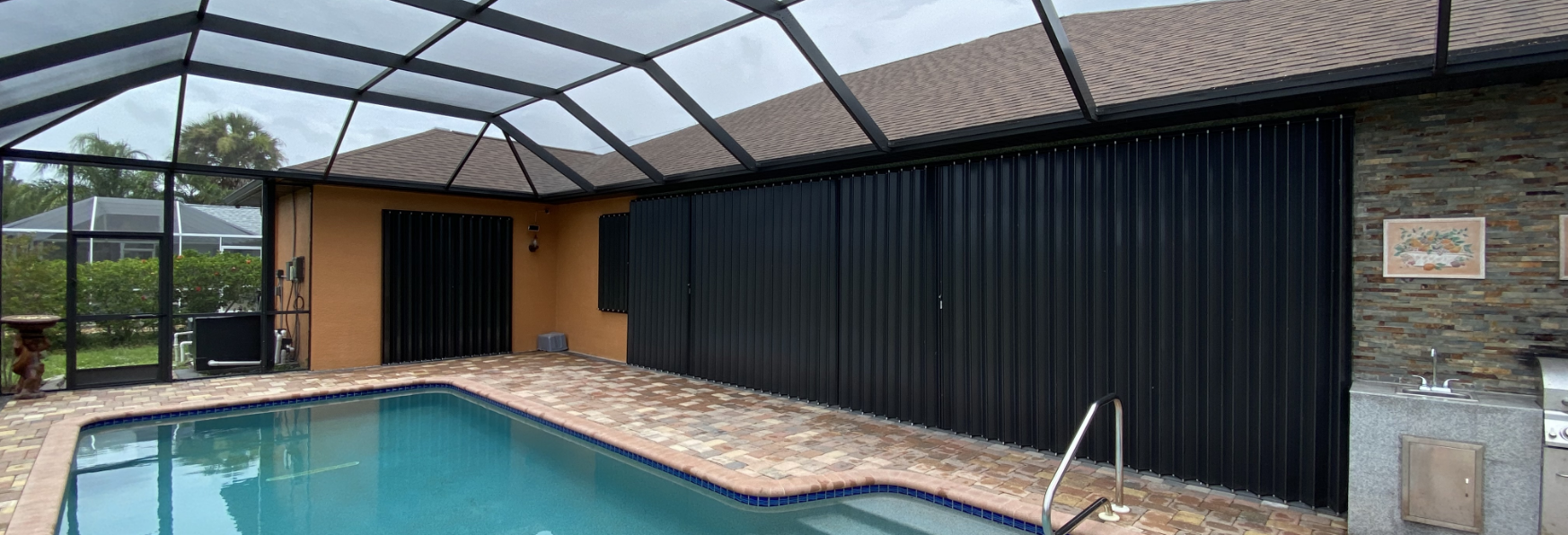
A common sweet spot for many homeowners. Easier to close quickly, no hauling panels out of the garage. - Roll-down shutters
Often the most convenient. Fast deployment and strong protection, but typically higher upfront cost due to engineering and components. - Bahama shutters and colonial shutters
Popular for curb appeal with practical storm protection. These can be a great fit depending on window style and exposure.
A good installer will talk through what you need for each side of the house, not just sell you one style for everything.
2) The hidden cost of “doing nothing”
Florida storms create expensive “surprise costs”:
- Emergency plywood and labor when a storm is approaching
- Higher chance of interior water damage if a window fails
- Temporary repairs that turn into permanent repairs
- Stress-driven last-minute decisions, which are always more expensive
Shutters are one of the few hurricane upgrades where you pay once and use the benefit every year.
Long-term protection and durability
A quality shutter system is built to be used repeatedly across multiple storm seasons. That matters, because the goal is not just surviving one hurricane. It is reducing your risk every single time a warning cone points your way.
The long-term value comes from:
- Repeatable protection: close them for every threat, not just “the big one”
- Lower chance of interior damage: protecting openings helps prevent water intrusion
- Less dependence on emergency prep: you are not fighting the Home Depot crowd two days before landfall
And unlike a lot of home improvements, hurricane shutters do not need to “look new” forever to do their job. They need to work.
Insurance benefits: what you can realistically expect
Insurance savings in Florida are complicated, but the concept is simple: insurers commonly offer wind mitigation discounts for features that reduce hurricane losses, and opening protection is often part of that picture.
Florida’s Chief Financial Officer publishes consumer guidance explaining that homeowners may qualify for windstorm premium reductions by installing mitigation features, and highlights the value of a wind mitigation inspection to document them.
Carriers also publicly describe wind mitigation discounts for Florida policyholders who have wind loss mitigation features.
Citizens, Florida’s largest property insurer, likewise lists mitigation discounts and emphasizes that documentation is required for discounts to apply.
The part homeowners miss: documentation is everything
You do not get credit because you know you have shutters. You get credit because your insurer has a report showing what you have, and that it qualifies.
That usually means getting a wind mitigation inspection and submitting the paperwork through your agent or carrier.
A major Florida option: My Safe Florida Home
If you are eligible, Florida’s My Safe Florida Home Program offers free wind mitigation inspections and grant assistance for approved upgrades, including home hardening measures.
Recent coverage also notes additional state funding and up to $10,000 in grants tied to storm resilience improvements.
Even if you do not receive grant funding, the inspection itself can still be useful for documenting mitigation features for potential insurance savings.
Important note: discount amounts vary by carrier, home features, and location. A reputable shutter company will never promise a specific dollar amount off your premium without seeing your policy and your mitigation report.
Resale value: the buyer psychology in Florida is real
Will hurricane shutters “pay for themselves” at resale?
Sometimes yes, sometimes not in a clean spreadsheet way. But here’s what absolutely happens in Florida real estate:
- Buyers ask about storm protection early.
- Buyers notice if a home feels “storm ready.”
- Buyers feel better making an offer when the home already has protective upgrades.
Hurricane shutters are one of those features that reduce perceived risk for a buyer. That can show up as:
- Stronger buyer interest
- Fewer objections during inspection
- Less negotiating leverage for a buyer trying to shave the price down due to storm concerns
Even when an appraiser does not line-item “shutters” with a perfect number, the market still responds to a home that looks prepared.
The peace of mind factor nobody can price correctly
This is the part homeowners mention after the first storm season with shutters:
- You stop playing the “should we board up?” game.
- You stop wondering if the tape-on-the-windows trick does anything (it does not).
- You prep earlier and faster.
- You sleep more.
If you have kids, pets, elderly family members, or you travel for work, peace of mind is not fluff. It is the ability to make sane decisions under pressure.
A simple cost vs value way to decide
If you want a practical way to choose without overthinking it, ask yourself:
1) How exposed is my home?
- Large sliders or big picture windows
- Coastal or open areas with higher wind exposure
- Older windows and doors
- Lots of trees or nearby construction debris risk
More exposure means higher value from shutter protection.
2) How likely am I to actually deploy protection?
If you know you will not haul panels out of the garage, be honest with yourself. Convenience matters because the best shutter is the one you actually close.
- Want lowest cost and you do not mind labor: panels
- Want fast deployment and strong value: accordion
- Want maximum convenience: roll-down
- Want protection with architectural style: Bahama or colonial
3) How long will I stay in the home?
The longer you own it, the more sense shutters make. This is a long-term protection purchase, not a trendy renovation.
4) What is my “storm stress” worth?
If every tropical wave sends you into panic mode, shutters can be as much a lifestyle upgrade as a protection upgrade.
Common questions Florida homeowners ask
Do shutters replace impact windows?
Not necessarily. Many homeowners choose one or the other based on budget and lifestyle. Shutters are often a more cost-effective way to protect existing windows, especially if your windows are still in good shape.
Are all shutters the same?
No. In Florida, product approval, proper anchoring, and correct installation matter. Code and testing standards for debris impact performance exist for a reason.
Will shutters lower my insurance premium?
They can, but it depends on your carrier, your home’s other mitigation features, and proper documentation through a wind mitigation inspection.
So, are hurricane shutters worth it?
For most Florida homeowners, yes. Not because they are exciting, but because they are practical.
They protect your openings, reduce the odds of expensive interior damage, may help you qualify for wind mitigation insurance discounts with the right documentation, and they make your home more appealing to buyers who do not want to inherit storm risk.
Most importantly, shutters give you control during storm season, which is the one thing Florida weather loves to take away.
If you want help choosing between storm panels, accordion shutters, roll-down shutters, Bahama shutters, or colonial shutters, Shutters 9-1-1 can walk you through options that fit your home, budget, and how you actually live during hurricane season.