
If you’ve started researching hurricane protection for your home, you’ve probably noticed that “impact windows” come up constantly, and for good reason. Unlike shutters, which you have to deploy before a storm and remove afterward, impact windows are a permanent, year-round layer of protection. But they’re also a bigger investment than shutters, and homeowners usually have the same three questions: What do they cost? What does installation involve? And what should I actually expect once they’re in?
Here’s a straightforward breakdown from the team at Windows and Shutters 9-1-1.
What Are Hurricane Impact Windows, Exactly?
Impact windows use laminated glass, which consists of two or more layers of glass bonded to an inner plastic interlayer (similar to a car windshield). When debris strikes the glass during a storm, the outer layer may crack, but the interlayer holds everything together. The window stays intact, your home stays sealed, and wind can’t get inside and start working on your roofline.
This matters more than people realize. Once wind gets into a home through a broken window, it creates internal pressure that can lift a roof or blow out walls from the inside. A window that holds under impact isn’t just protecting the glass, it’s protecting the whole structure.
What Drives the Cost
Impact window pricing varies based on a handful of factors:
- Frame material — vinyl windows are typically more budget-friendly and energy-efficient, while aluminum frames offer a slimmer profile and extra strength for larger openings.
- Window size and style — single hung, horizontal roller, casement, awning, and picture windows all price differently.
- Design pressure rating — homes in High-Velocity Hurricane Zones (HVHZ) need windows engineered for higher wind-load requirements, which affects glass thickness and frame construction.
- Number of openings — a whole-home retrofit costs more upfront than shutters but eliminates the labor of storm prep every single time a storm is forecast.
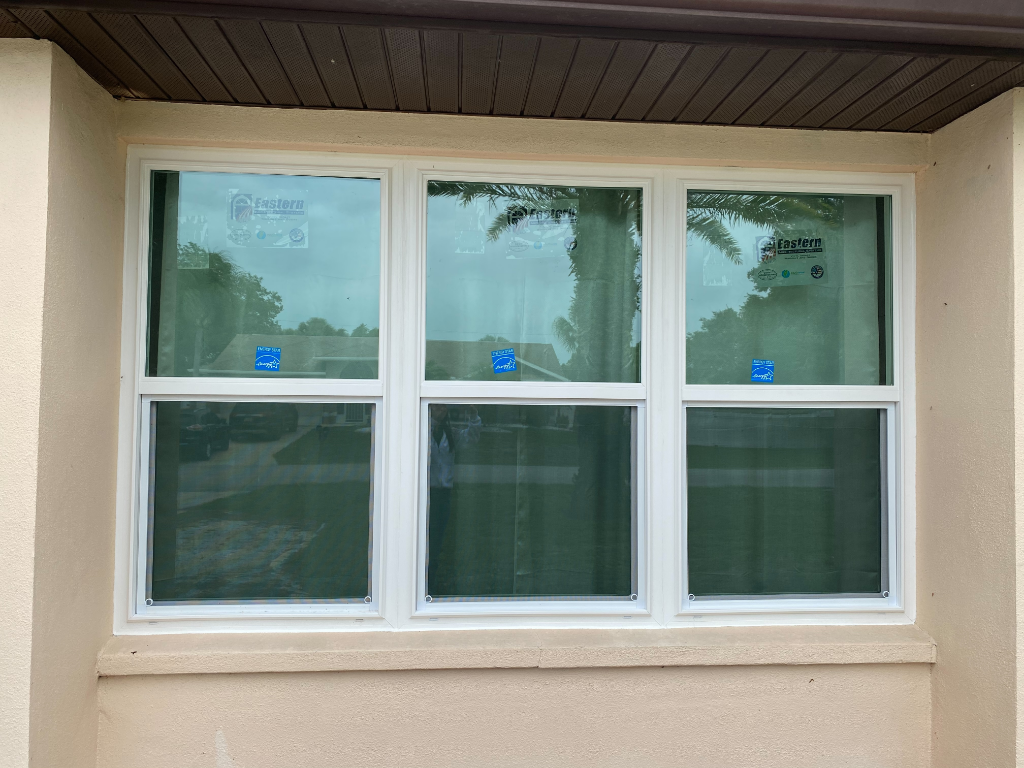
We install the Bertha line from Eastern Architectural Systems (EAS) on many of our projects specifically because it’s engineered for HVHZ conditions, with vinyl frame walls that run about 12% thicker than standard windows on the market. That extra material is part of what allows the line to carry HVHZ approval under the Florida Building Code.
What Installation Actually Looks Like
A lot of homeowners assume window replacement means weeks of disruption. In practice, a typical impact window installation is more contained than that:
- Measurement and product order — every opening is measured individually; impact windows are not one-size-fits-all.
- Permitting — because impact windows are a structural upgrade, most jurisdictions require a permit and inspection. We handle this as part of the process.
- Removal and installation — old windows come out, new units go in, and the surrounding area is sealed and flashed correctly. This is the step where a rushed or inexperienced install shows up later as leaks, so proper technique here matters as much as the product itself.
- Inspection and walkthrough — your local building department signs off, and we walk you through the finished product.
Most single-family homes can be fully re-windowed in a matter of days, not weeks, depending on the number of openings.
What to Expect Afterward
Beyond storm protection, homeowners typically notice two things right away: a drop in outside noise, and a more stable indoor temperature. Impact windows are also energy-rated, so many homeowners see a modest reduction in cooling costs which is worth factoring into the overall value of the upgrade, not just the storm-season benefit.
Is It Worth It Compared to Shutters?
Shutters are still a smart, cost-effective option, especially for homeowners who want protection without replacing every window. But impact windows solve a different problem: they remove storm prep from the equation entirely, they don’t change the look of your home from the street, and they add resale value that shutters generally don’t.
If you’re weighing the two, our team can walk your home with you and give you a straightforward, no-pressure comparison based on your budget and your openings — not just what’s easiest to sell.
Ready to get a real number for your home? Contact Windows and Shutters 9-1-1 for a free on-site estimate.